Philippines Faces Rising Climate Risks as El Niño Expected to Intensify Through 2027
News | Weather Posted on 2026-09-23 12:29:41
PAGASA warns of prolonged dry conditions, while global study projects hundreds of thousands of heat-related deaths during the current El Niño,
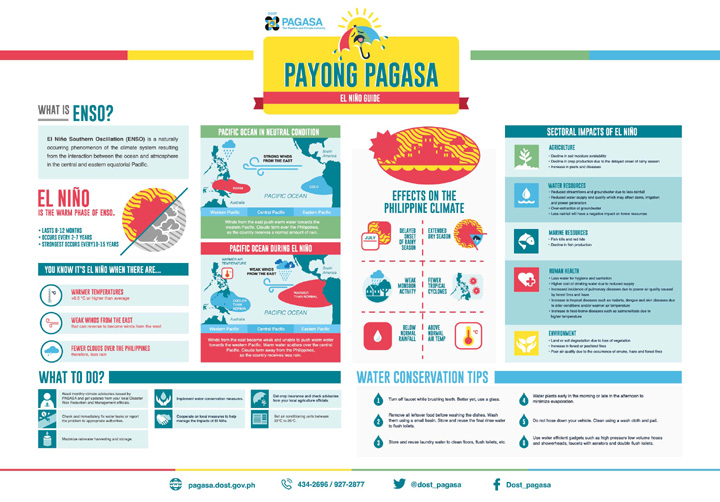
MANILA, Philippines — The Philippines is entering a potentially prolonged period of climate-related risks as the ongoing El Niño is expected to strengthen toward the end of 2026 and continue into the first half of 2027, according to the Philippine Atmospheric, Geophysical and Astronomical Services Administration (PAGASA).
PAGASA's latest assessment places the country under a moderate to strong El Niño, with climate models indicating that the phenomenon could reach a very strong state before the end of 2026 and persist until the first half of 2027. The weather bureau warns that El Niño increases the likelihood of below-normal rainfall, dry spells and drought in parts of the country, while some western areas may still experience periods of above-normal rainfall during the Southwest Monsoon.
The forecast highlights the unusual nature of the country's exposure: El Niño does not mean uniformly dry weather across the Philippines. PAGASA has documented episodes of intense rainfall and flooding in western Luzon during the 2026 Habagat season even while other areas experienced persistent moisture deficits. In August, PAGASA reported that parts of southern Luzon, central and eastern Visayas, and Mindanao had significantly drier-than-normal conditions, with some dry conditions persisting since May.
Agriculture and water emerge as major concerns
The United Nations Office for Disaster Risk Reduction (UNDRR) identifies agriculture and water resources as the principal impact pathways for El Niño in the Philippines.
According to the UNDRR's 2026 Philippine climate impact outlook, strengthening El Niño conditions could bring below-normal rainfall, higher temperatures and progressively worsening dry conditions in parts of the country. The consequences could extend beyond agriculture and water to food production, rural livelihoods, household welfare, health, energy and the wider economy.
The Department of Agriculture has already warned that a strong El Niño could significantly reduce agricultural production.
In May, the department estimated that Philippine rice production could decline by as much as 700,000 metric tons, or approximately 3.5 percent of the annual production target, if a strong El Niño develops. The DA has responded with measures including solar-powered irrigation, adjustments to planting schedules, crop diversification and other interventions designed to reduce the effects of prolonged dry conditions.
More recent DA planning has placed the potential palay production decline at approximately 750,000 metric tons, while the department has decided to keep rice imports open as it prepares for possible supply constraints during the dry season harvest in early 2027.
Heat presents another major public-health risk
The Philippine situation is occurring amid a broader global concern over extreme heat.
A new study from the University of Chicago's Climate Impact Lab projects approximately 451,000 additional heat-related deaths globally during the broader period associated with the current El Niño event. The researchers estimate that approximately 239,000 additional deaths could occur during the six-month period covered by their near-term projection, although these are modelled estimates rather than observed deaths or guaranteed outcomes.
The study estimates that Southeast Asia could experience approximately 19,400 additional heat-related deaths across the Philippines, Vietnam, Thailand and Cambodia combined, while Indonesia is projected to experience approximately 19,300 additional deaths. The study does not provide a separate Philippines-specific mortality figure in the published summary, meaning the regional figure should not be interpreted as a Philippine death toll.
The researchers say the projected mortality illustrates the potential consequences of extreme temperatures occurring in a world that has already warmed because of climate change. They also emphasize that adaptation measures—including heat early-warning systems, cooling measures and protections for outdoor workers—can reduce heat-related deaths.
The Philippine impact will not be limited to drought
The emerging climate picture is more complicated than a simple "dry season."
PAGASA reported that intense Southwest Monsoon rainfall produced widespread flooding and landslides in parts of Luzon in August. In one episode, the PAGASA Science Garden station in Quezon City recorded 305.4 millimeters of rainfall over three days. PAGASA explained that while El Niño generally increases the probability of below-normal rainfall, it can also contribute to above-normal rainfall over western portions of the country during the Southwest Monsoon.
This means communities may simultaneously face two different climate hazards:
extreme rainfall and flooding in some areas, and drought and water stress in others.
Such variability presents challenges for agriculture, water management, disaster preparedness and infrastructure planning.
Food prices and household welfare could face additional pressure
The Department of Agriculture has warned that drought could affect crop production, farmers' incomes, food supply and consumer prices. The department has been revising its response plans as new weather, crop, water and market information becomes available.
The potential economic chain is significant:
lower rainfall → water stress → reduced agricultural production → tighter food supply → increased dependence on imports → possible price pressure → reduced household purchasing power.
However, the magnitude of any eventual food-price increase cannot yet be established because it will depend on actual rainfall, irrigation availability, agricultural responses, international commodity prices, imports, government interventions and other economic factors.
2027 could become a critical test of resilience
Government agencies are already preparing for the possibility that the effects of El Niño will extend beyond the end of 2026.
DOST Secretary Renato Solidum Jr. recently highlighted technologies such as mobile solar-powered irrigation systems and more efficient irrigation methods as potential tools for helping farmers cope with limited water availability. He also emphasized the importance of using PAGASA forecasts to guide agricultural and water-management decisions.
The challenge is particularly important for major agricultural regions where livelihoods depend heavily on rainfall and irrigation.
PAGASA's current outlook indicates that the El Niño-related risks could continue into the first half of 2027.
A national resilience challenge
The current forecasts do not establish that the Philippines will experience a specific number of deaths, a specific percentage decline in GDP or a particular level of inflation.
Instead, the available evidence identifies a set of interconnected risks:
- Water security
- Agricultural production
- Food supply and prices
- Heat-related illness
- Labor productivity
- Electricity demand
- Rural livelihoods
- Public-health pressure
- Disaster response
- Household welfare
UNDRR stresses that the severity of these effects will vary geographically and that El Niño events are not identical. It recommends that risks be assessed continuously as conditions evolve.
For the Philippines, therefore, the most important question is not simply how strong El Niño becomes, but how effectively the country can convert climate forecasts into early action.
Improved water management, climate-smart agriculture, irrigation, food-stock planning, heat-health protection, early-warning systems and targeted assistance to vulnerable communities could reduce the effects of the event.
The 2026–2027 El Niño should therefore be viewed as a national resilience test—not only a weather event.
With PAGASA expecting the phenomenon to remain in place into 2027, the coming months will be critical for determining how agriculture, water systems, communities and the wider economy respond to a potentially prolonged period of heat and rainfall disruption.
(The forecasts remain subject to change, and government agencies continue to update their assessments as new climate and weather observations become available.)
What Filipinos Can Do to Prepare
As El
Niño conditions may continue into 2027, individuals, families, farmers and
communities can take practical steps to reduce their exposure to heat, water
shortages and possible disruptions to food and livelihoods.
1. Prepare for extreme heat
People
should avoid unnecessary outdoor activities during the hottest parts of the
day, particularly when temperatures and heat-index levels are high. Those who
work outdoors should take regular breaks in shaded or cool areas, drink
sufficient water and follow official heat advisories.
Children,
older adults and people who are particularly vulnerable to heat should receive
additional attention during periods of extreme heat.
2. Maintain an adequate household water supply
Families
should conserve water and, where practical and safe, maintain an emergency
supply for drinking and essential household needs.
Water
should be stored in clean, covered containers and regularly checked. Households
should also repair leaking faucets, pipes and water tanks and avoid unnecessary
water consumption.
Communities
dependent on wells, springs, reservoirs or other local sources should monitor
water availability and follow local government advisories.
3. Prepare an emergency household supply
Families
may consider maintaining basic emergency supplies, including:
- Drinking water
- Ready-to-eat or easily
prepared food
- Essential medicines
- First-aid supplies
- Flashlights and spare
batteries
- Battery-powered or
rechargeable radios
- Power banks
- Personal hygiene supplies
- Important documents stored
securely
- Emergency contact
information
Households
should adjust their supplies according to their location, family size and
specific needs.
4. Protect food and household finances
Families can
reduce vulnerability to possible food-price increases by planning purchases,
avoiding unnecessary food waste and maintaining reasonable stocks of essential
non-perishable food items.
Consumers
should avoid panic buying or unnecessary hoarding, which can contribute to
shortages and price pressure.
5. Farmers should follow local agricultural
advisories
Farmers
should closely monitor PAGASA, the Department of Agriculture, local
agricultural offices and irrigation authorities for updated forecasts and
recommendations.
Where
appropriate, farmers may consider adjusting planting schedules, selecting crops
suitable for available water conditions, improving irrigation efficiency, using
water-saving technologies and protecting livestock from excessive heat.
Agricultural
decisions should be based on local conditions rather than relying solely on
generalized El Niño forecasts.
6. Protect livestock and pets from heat
Animals
should have access to adequate drinking water, shade and appropriate
ventilation. Farmers and pet owners should monitor animals for signs of heat
stress and seek veterinary assistance when necessary.
7. Use electricity wisely
Higher
temperatures can increase demand for air-conditioning and electric fans.
Households can reduce energy consumption by improving ventilation, using
shading, maintaining air-conditioning equipment and avoiding unnecessary
electricity use during periods of peak demand.
8. Prepare for possible power and water
interruptions
Families
in areas vulnerable to water shortages or power interruptions should have
contingency plans, including alternative lighting, communication methods and
safe water-storage arrangements.
Those
using generators or other backup equipment should follow proper safety
procedures and never operate fuel-burning generators indoors or in poorly
ventilated spaces.
9. Stay informed through official sources
Residents
should rely on official information from PAGASA, local government units, the
Department of Agriculture, the Department of Health, NDRRMC and other
government agencies rather than unverified social-media posts.
Weather
and climate conditions can change rapidly, and local conditions may differ
substantially from national forecasts.
10. Check on vulnerable members of the community
El Niño
preparedness is also a community responsibility. Families and neighbors can
check on older persons, children, persons with disabilities, people living
alone and households with limited access to water, cooling or transportation.
Barangays
can identify vulnerable households in advance and establish communication and
assistance mechanisms before conditions become severe.
Prepare, but do not panic
The
current forecasts indicate an elevated risk of heat, rainfall variability,
drought and water stress, but they do not mean that every part of the
Philippines will experience the same conditions or that specific disasters are
certain to occur.
The most
appropriate response is preparation based on reliable information.
Monitor
the forecast. Conserve water. Protect against extreme heat. Prepare basic
supplies. Support vulnerable family members and neighbors. Follow local
government advisories.
As the country moves toward 2027, early preparation can help households and communities reduce the potential effects of prolonged heat and water stress while allowing government agencies, farmers, businesses and citizens to respond to changing conditions based on the latest scientific information.
NPO News Online
Share:
Writer :
Link :
Leave a Comment:
Date: Wednesday | October 7, 2026 | 12:44:am
Sections
Recent News
RECENT POSTS
CDA MIMAROPA Empowers Cooperative Leaders to Lead the Digital Transformation and AI Era
Category : AGRI-NEWS
Read More →