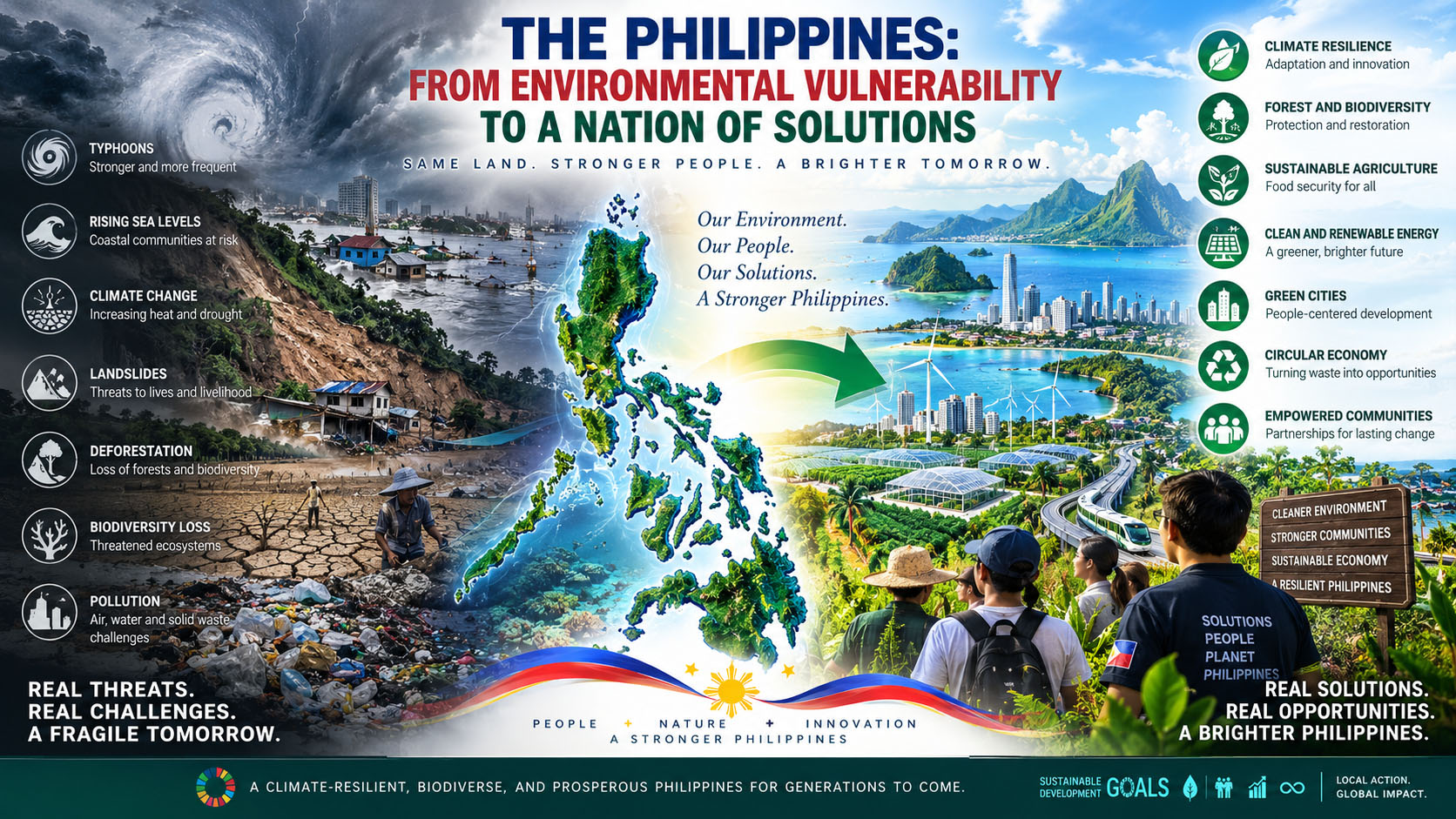
THE PHILIPPINES: FROM ENVIRONMENTAL VULNERABILITY TO A NATION OF SOLUTIONS
OPINION | Letter to the Editor Posted on 2026-09-20 09:27:00
An Opinion by: HENRY V. BAYUBAY
Philippine Rainforest
Irreversibility Theory (PRIT) Framework Developer
Mindset Views
Sometimes I ask myself: How far can we really understand the Philippines and the extraordinary environment we have inherited?
We live in an archipelago of thousands of islands, surrounded by some of the most biologically diverse marine and terrestrial ecosystems in the world. Even something as fundamental as the exact number of islands has changed as mapping technologies improve and as geographical features are reclassified. The Philippines is not a static piece of geography. It is a living, changing landscape shaped by volcanoes, oceans, rivers, forests, mountains, weather, and time.
Our country is also part of one of
the most geologically active regions on Earth. Volcanic activity has helped
create and reshape our landscapes, while erosion, subsidence, sea-level rise,
storms, and other natural processes continuously transform our islands and
coastlines.
But
perhaps our greatest resource is something we sometimes overlook:
Life
grows here.
Every day, seeds germinate across
the Philippines. Plants regenerate, forests recover in some places,
agricultural ecosystems produce food, and nature continuously demonstrates its
capacity for renewal.
I have heard a Japanese scientist
describe the Philippines to me in a way that stayed in my mind: that our
environment has such remarkable natural growing potential that, in many places,
a seed placed into the soil can begin to grow without the intensive
intervention required elsewhere.
Scientifically, we should not turn
that statement into a claim that every Philippine soil is the richest in the
world. Our soils vary enormously from volcanic soils to alluvial, limestone,
upland, coastal, and highly weathered tropical soils. But the larger
observation is important:
The
Philippines possesses extraordinary natural conditions for biological
productivity.
I understand this personally.
I was born with agriculture in my
ancestry. Farming was not something I simply studied; it was part of the
environment and culture that surrounded my family.
But my
life took another direction.
I was encouraged to pursue college
in a field other than agriculture. Along the way, I discovered computers,
technology, communications, and digital systems. I eventually became deeply
involved in information technology and digital development.
Yet somehow, I returned to where I
began.
I returned to agriculture.
Only this time, I did not return as
the farmer of the past.
I returned as a digital farmer.
I began to see that technology and
agriculture do not have to be separate worlds. Sensors, artificial intelligence,
satellite information, communications, automation, digital marketplaces, data
analytics, renewable energy, and smart systems can become tools for farmers,
communities, environmental managers, and local governments.
That experience changed the way I
look at the Philippines.
I began to see our country not only
as vulnerable to climate change, disasters, deforestation, flooding, drought,
and environmental degradation.
I began to see the Philippines as a living
laboratory for solutions.
Climate change is real. We cannot
simply wish it away.
We cannot control the global climate
by ourselves.
But we can prepare.
We can adapt.
We can mitigate where we can.
We can protect watersheds.
We can restore forests.
We can improve agriculture.
We can redesign settlements.
We can protect our coastlines.
We can improve our water systems.
We can reduce waste.
We can develop renewable energy.
We can strengthen food security.
We can use technology to
understand our environment before problems become disasters.
The
question should therefore not simply be:
"Are we heading toward environmental collapse?"
The more
productive question is:
"What are we going to build so that our communities can survive and prosper despite environmental change?"
That is
where I believe the Filipino character becomes important.
The Philippines has experienced
earthquakes, volcanic eruptions, typhoons, floods, droughts, economic crises,
and countless other challenges. Filipinos have repeatedly demonstrated the
ability to adapt, rebuild, cooperate, improvise, and continue.
But resilience should not mean that
we simply survive disaster after disaster.
Resilience must evolve into
preparedness, innovation, and prevention.
We should not romanticize
suffering.
We should develop systems that
reduce unnecessary suffering.
We should not simply wait for
another flood and then rebuild.
We should
understand watersheds, drainage, land use, rainfall patterns, river systems,
forests, agriculture, urbanization, and climate risks well enough to make
better decisions before the disaster happens.
We should not simply complain about
food insecurity.
We should develop productive
agricultural systems, modernize farmers' access to technology and markets,
reduce post-harvest losses, strengthen local food systems, and make agriculture
an attractive profession for the next generation.
We should not simply criticize
environmental destruction.
We should create economic systems
where protecting forests, water, biodiversity, and agricultural land becomes
part of development itself.And we should not allow negativity to become our
national identity.
There
is already enough pessimism.
What we need is a community of
Filipinos who believe that solutions are possible.
·
Scientists.
·
Farmers.
·
Engineers.
·
Teachers.
·
Entrepreneurs.
·
Environmentalists.
·
Programmers.
·
Students.
·
Indigenous
communities.
·
Cooperatives.
·
Local
governments.
·
Private
companies.
·
Researchers.
·
Inventors.
·
Media
organizations.
·
And
ordinary citizens.
Everyone has a role.
We need to bring these people together—not
to pretend that our problems do not exist, but to work on them with evidence,
courage, science, technology, and cooperation.
The Philippines should not merely be
known as a country frequently hit by disasters.
It should become known as a country that learns from its environment and develops solutions from those lessons.
Our forests can teach us about
water.
Our mountains can teach us about
watersheds.
Our volcanoes can teach us about
geology and fertile landscapes.
Our oceans can teach us about biodiversity
and climate.
Our farms can teach us about food
security.
Our communities can teach us
about resilience.
Our technology can help us
connect all of these systems.
And our people can turn that
knowledge into action.
Perhaps this is one of the greatest
opportunities of the Filipino generation:
to connect the natural intelligence of our environment with the technological intelligence of our people.
That is the philosophy behind what I call the Digital Farmer—not simply a farmer who uses computers, but a Filipino who understands that agriculture, environment, science, technology, business, and community development are interconnected.
We don't have to choose between
development and the environment.
We have to learn how to develop with
the environment.
We don't have to surrender to
climate change.
We have to prepare for it.
We don't have to deny our
problems.
We have to understand them.
We don't have to wait for other
countries to solve everything for us.
We can participate in developing
our own solutions.
And we don't have to build a future based on fear.
We can build a future based on knowledge, cooperation, innovation, and confidence in what Filipinos can accomplish together.
The Philippines is not simply a
country that needs saving. It is a country with extraordinary natural
resources, biodiversity, human creativity, agricultural potential, and
scientific opportunities that we are still learning how to fully understand.
Our responsibility is to understand
them. Protect them. Develop them responsibly. And transform that knowledge into
solutions that benefit Filipino communities.
The future should not be about
asking whether the Philippines can survive.
The future should be about
building a Philippines capable of thriving.
And that work begins with us.
Share:
Writer :
Link :
Leave a Comment:
Date: Wednesday | October 7, 2026 | 12:44:am
Sections
Recent News
RECENT POSTS
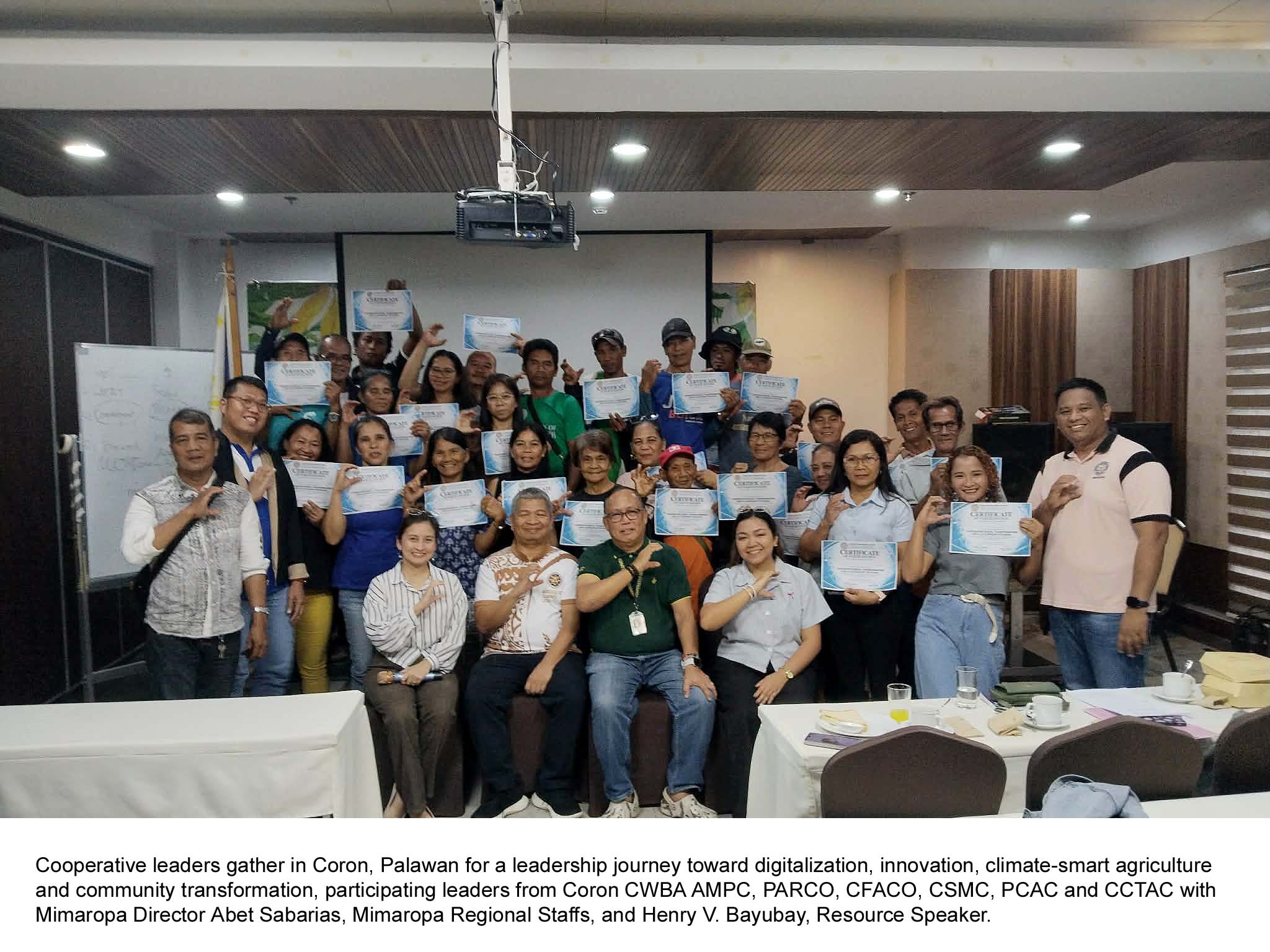
CDA MIMAROPA Empowers Cooperative Leaders to Lead the Digital Transformation and AI Era
Category : AGRI-NEWS
Read More →