Marcos Allocates ?1 Billion to Project NOAH to Strengthen Flood and Climate Resilience
News | Environment Posted on 2026-09-08 03:37:24
MANILA, Philippines — President Ferdinand R. Marcos Jr. has ordered the release of an additional ₱1 billion for Project Nationwide Operational Assessment of Hazards (NOAH), strengthening the government's use of science, data, and technology in disaster preparedness, flood management, and climate-change adaptation.
The additional funding is expected to enhance the country's capacity to monitor hazards, improve flood forecasting, and develop more effective disaster-risk-reduction strategies as the Philippines faces increasingly severe tropical cyclones, heavy rainfall, and flooding.
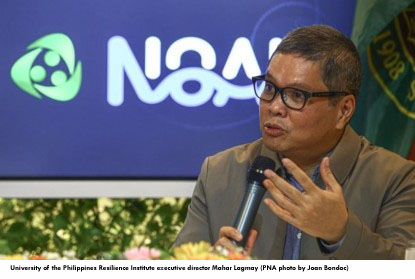
Mahar Lagmay, executive director of the University of the Philippines Resilience Institute (UPRI), welcomed the funding, saying the investment would allow Project NOAH to strengthen hazard monitoring, flood management, scientific research, and disaster-risk-reduction systems.
Lagmay said the continued support for Project NOAH will help transform scientific knowledge into practical government action aimed at protecting lives and building safer, more resilient, and sustainable communities.
Project NOAH, which is managed by the UPRI, uses historical records, satellite imagery, rainfall data, hazard maps, and other scientific datasets to develop impact-based forecasting systems.
The program is expected to improve the government's ability to determine where flooding may occur and assess its possible impact on roads, homes, buildings, communities, and transportation systems.
Science and Data for Flood Management
The ₱1-billion allocation is also expected to strengthen the government's science-based approach to infrastructure planning and flood management.
The Department of Public Works and Highways (DPWH) has begun updating flood-management master plans as part of the Marcos administration's efforts to develop long-term solutions to recurring flooding.
DPWH Secretary Vince Dizon has directed the updating of flood-management plans nationwide to ensure that future infrastructure projects reflect current climate conditions and scientific hazard data.
The DPWH is working with Project NOAH, local government units, and other government agencies to integrate detailed hazard mapping and scientific information into flood-control planning.
President Marcos recently emphasized that the country already has long-term flood-management plans that must now be implemented and updated to respond to present-day climate challenges.
The government has also identified several priority measures, including the de-clogging and dredging of waterways, improved drainage systems, proper land-use planning, and the development of long-term flood-control infrastructure.
Faster and More Accurate Disaster Forecasting
Lagmay said Project NOAH's impact-based forecasting system is expected to provide more detailed and timely information on possible flooding.
The system aims to forecast potential flood events and their impact on communities and infrastructure, allowing government agencies and local authorities to make faster and more informed decisions.
According to UPRI, the success of the ₱1-billion investment will be measured through improved information systems, greater transparency, evidence-based governance, more effective flood management, and reduced disaster risks and losses.
Of the total allocation, ₱935 million will support research services, while ₱65 million will fund general management and supervision for the implementation of Project NOAH.
The funding forms part of the University of the Philippines System's appropriation under the 2026 General Appropriations Act.
The budget will support several major initiatives, including:
High-resolution mapping of major river basins;
Hazard and flood-risk assessments;
Science-based land-use planning;
Oplan Kontra Baha initiatives;
LiDAR and drone-based topographic surveys;
Mapping of hidden and underground waterways;
Sediment and erosion assessments;
Native tree mapping;
Nature-based flood-control solutions;
Capacity-building programs with state universities and colleges; and
The use of artificial intelligence and advanced analytics for disaster-risk management.
UP President Angelo Jimenez described the funding as an important investment in research and innovation that can directly contribute to national development and public safety.
The expanded funding for Project NOAH reflects the Marcos administration's growing focus on integrating science and technology into national governance, infrastructure planning, disaster preparedness, and climate-change adaptation.
As extreme weather events become more frequent and severe, Project NOAH is expected to play an increasingly important role in helping government agencies and communities prepare for disasters, reduce risks, and protect lives.
NPO NEWS TEAM I PNA-PR
Share:
Writer :
Link :
Leave a Comment:
Date: Wednesday | October 7, 2026 | 12:44:am
Sections
Recent News
RECENT POSTS
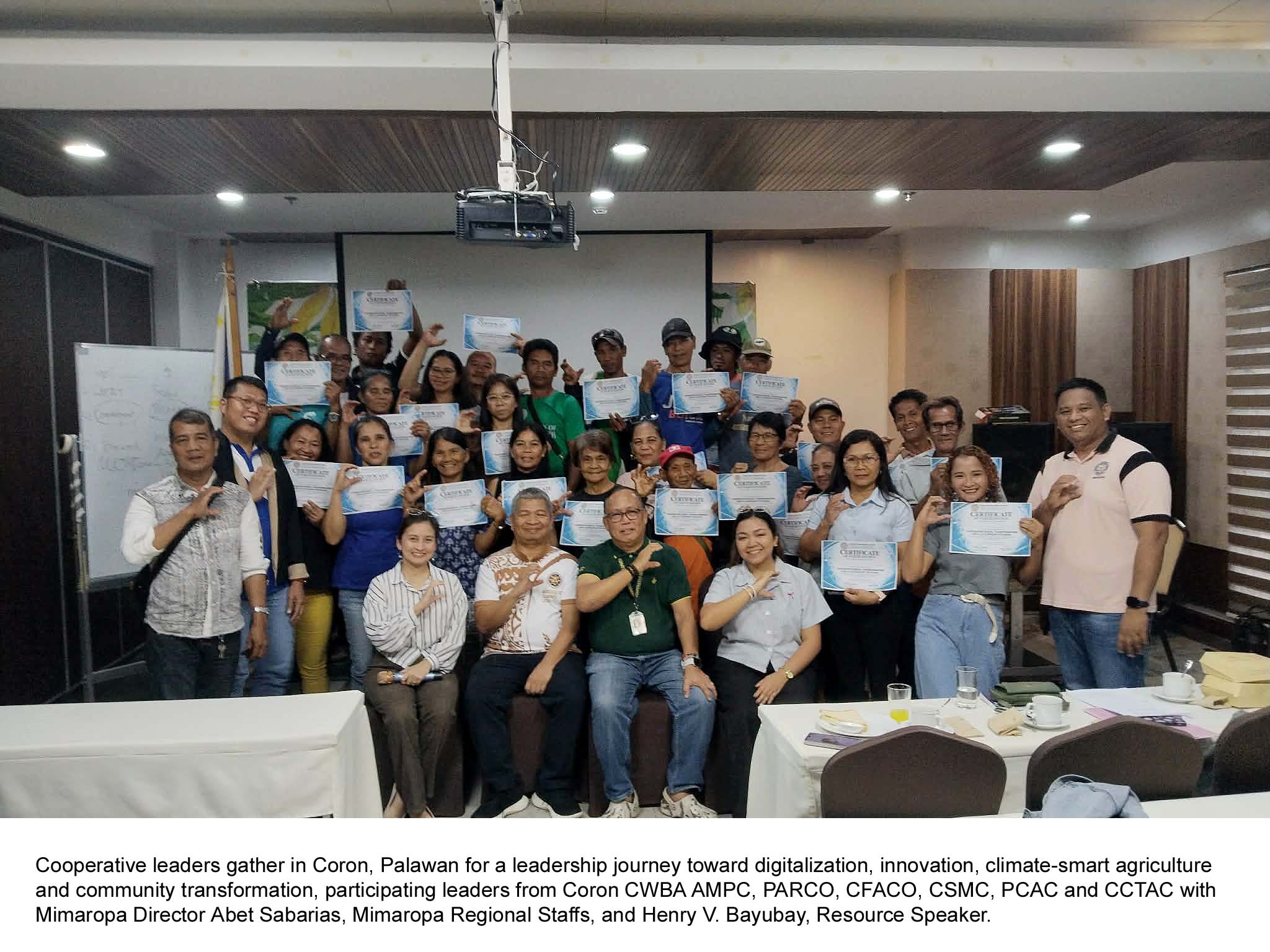
CDA MIMAROPA Empowers Cooperative Leaders to Lead the Digital Transformation and AI Era
Category : AGRI-NEWS
Read More →