Koloma Begins Seismic Survey in Pangasinan to Unlock Philippines’ Native Hydrogen Energy Potential
Business | Energy Posted on 2026-07-14 02:25:45
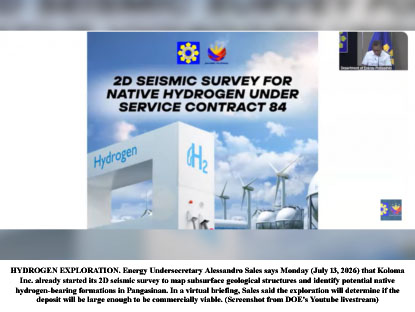
MANILA – The Philippines has taken another step toward developing indigenous clean energy as Koloma Inc. officially launched a 2D seismic survey in Bugallon, Pangasinan, advancing the country's first large-scale exploration for naturally occurring hydrogen, the Department of Energy (DOE) announced on Monday.
The seismic survey marks a significant milestone in the government's efforts to identify new renewable energy resources that could strengthen the country's long-term energy security and support the transition to cleaner sources of power.
Energy Secretary Sharon Garin led the project's commencement activities on July 10, highlighting the government's commitment to expanding scientific exploration of alternative energy resources.
Prior to the launch, Garin conducted an aerial inspection of the Los Fuegos Eternos natural gas seep area, where geological sampling was carried out in May to determine the presence of naturally occurring hydrogen.
According to the DOE, the initial geological findings showed encouraging indications of hydrogen gas, providing sufficient basis for more detailed exploration and scientific investigation.
Earlier this year, Koloma completed an extensive 27,976.5-line-kilometer Aero-Gravity and Magnetics (AGM) Survey, conducted from March to early June, to map underground geological formations and identify areas with hydrogen potential.
While the interpretation of the AGM data continues, the company has now proceeded with the next phase of exploration through a 132.6-line-kilometer 2D seismic survey, which will generate high-resolution images of subsurface rock formations and help pinpoint locations that may contain commercially recoverable native hydrogen deposits.
The seismic data will serve as the foundation for future drilling activities and provide scientists with a deeper understanding of the geological structures beneath Pangasinan.
During a virtual media briefing, DOE Undersecretary Alessandro Sales said Koloma is progressing rapidly with its exploration commitments and may begin drilling its first exploratory well by the end of 2026 or during the first quarter of 2027.
"Given Koloma's strong commitment, the company is advancing its exploration program ahead of schedule," Sales said.
He noted, however, that the project remains in the exploration stage and that commercial viability cannot yet be determined until drilling confirms both the presence and volume of recoverable hydrogen resources.
"Exploration is only the beginning. We still need to drill exploratory wells and determine whether the hydrogen deposits are large enough to support commercial production," Sales explained.
Unlike conventional hydrogen, which is produced through industrial processes, native hydrogen occurs naturally beneath the Earth's surface. If commercially viable reserves are confirmed, it could become a new indigenous source of clean energy, reducing dependence on imported fuels while supporting the country's climate and energy transition goals.
Koloma currently operates under Service Contract 83 and Service Contract 84, both awarded by the DOE for native hydrogen exploration.
According to Sales, the company's combined investment commitment for the two service contracts is estimated at USD8 million to USD9 million over a seven-year exploration period, including the drilling of exploratory wells.
The Department of Energy said the seismic survey forms part of the government's broader strategy to evaluate the Philippines' native hydrogen resources, diversify the country's indigenous energy portfolio, and position the nation as a potential leader in emerging clean hydrogen technologies.
If successful, the project could open a new chapter in the Philippines' energy sector by providing a sustainable, low-carbon, and locally sourced energy resource that supports economic growth, environmental sustainability, and long-term national energy resilience.
NPO NEWS TEAM | PNA-PR
Share:
Writer :
Link :
Leave a Comment:
Date: Wednesday | October 7, 2026 | 12:48:am
Sections
Recent News
RECENT POSTS
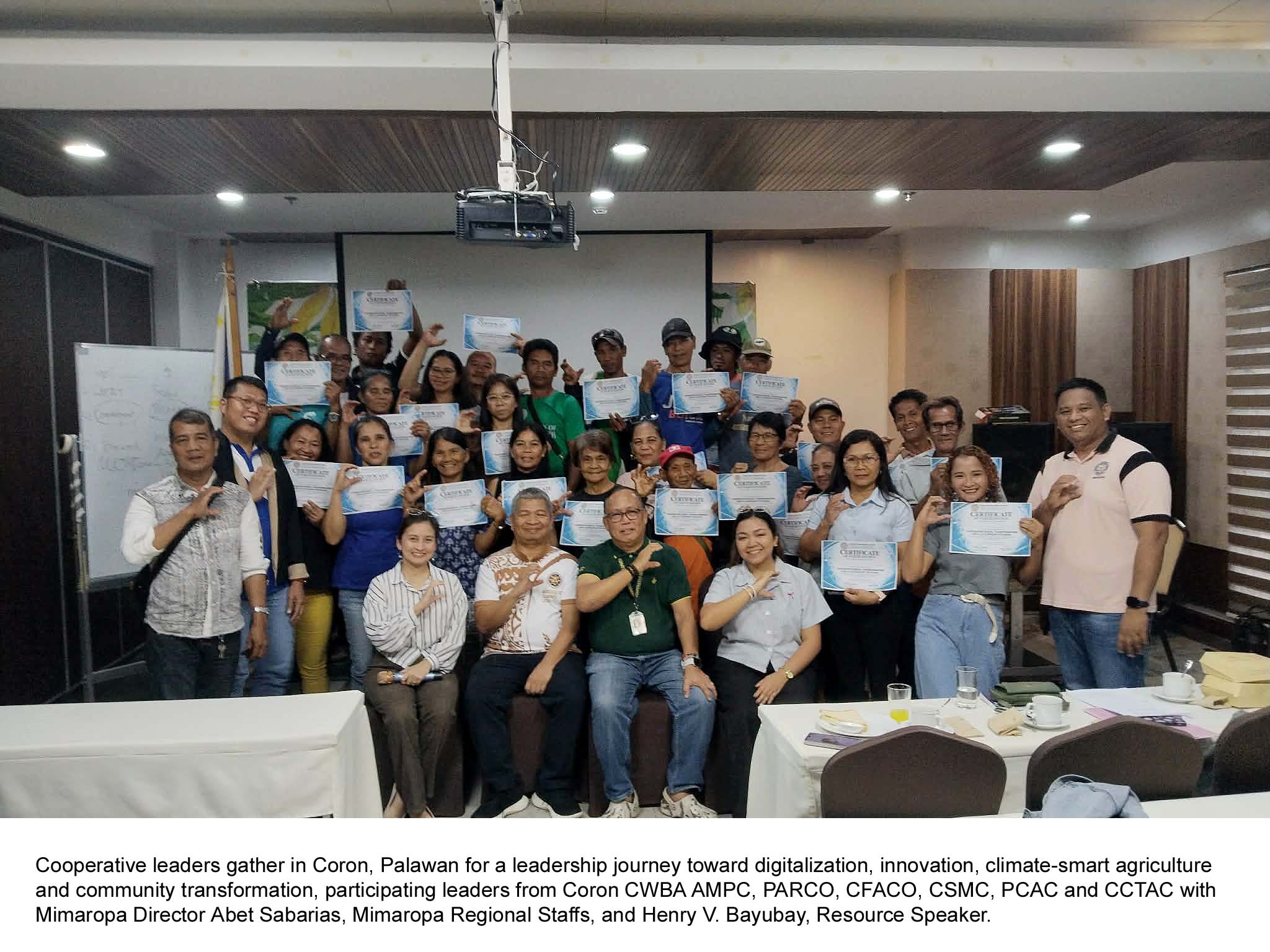
CDA MIMAROPA Empowers Cooperative Leaders to Lead the Digital Transformation and AI Era
Category : AGRI-NEWS
Read More →