MALAYSIA-PHILIPPINES TRADE ENGAGEMENT OPENS NEW DOORS FOR AGRI-TECH, E-MOBILITY, CLEAN ENERGY, AND SMART CITY DEVELOPMENT
AGRI-NEWS | NATIONAL Posted on 2026-06-08 06:16:37
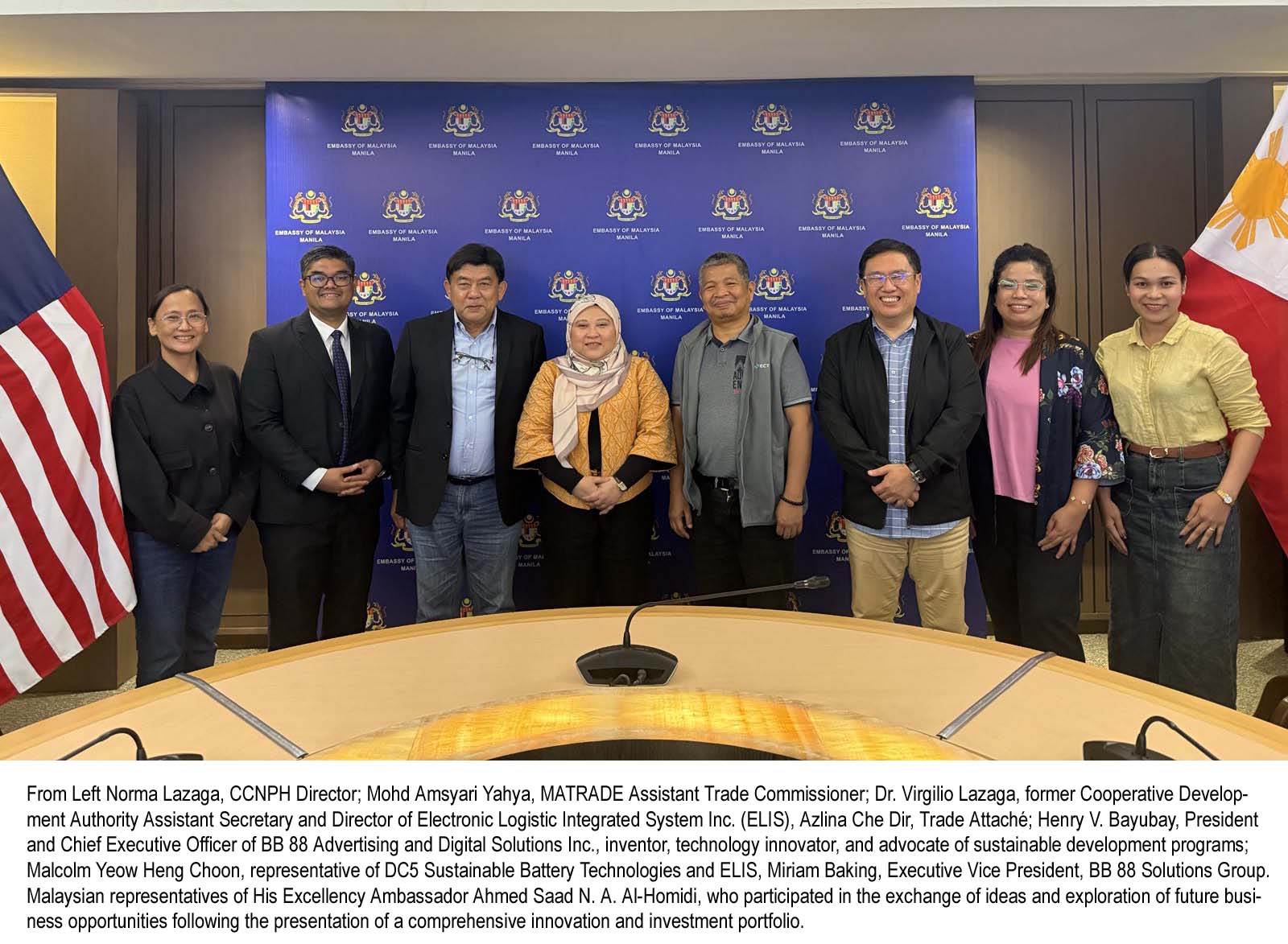
Strategic Meeting at the Malaysian Embassy Signals Promising Future for Sustainable Innovation and Bilateral Investment Cooperation
MANILA, Philippines — A high-level trade and
investment engagement held last Friday at the Malaysian Embassy has paved the
way for exciting future collaborations between Malaysia and the Philippines in
the fields of climate-smart agriculture, electric mobility, sustainable battery
technology, food security ecosystems, and smart city development.
The productive meeting brought together government,
trade, technology, and business leaders committed to advancing innovative and
sustainable solutions that address the growing challenges of food security,
clean transportation, energy sustainability, and urban development across
Southeast Asia.
Leading the Philippine meeting was Dr. Virgilio Lazaga, former Cooperative Development Authority Assistant Secretary and Director of Electronic Logistic Integrated System Inc. (ELIS), Henry V. Bayubay, President and Chief Executive Officer of BB 88 Advertising and Digital Solutions Inc., inventor, technology innovator, and advocate of sustainable development programs. Joining him were and Malcolm Yeow Heng Choon, representative of DC5 Sustainable Battery Technologies and ELIS, Miriam Baking, Executive Vice President, BB 88 Solutions Group.
Representing Malaysia were Mohd Amsyari Yahya,
MATRADE Assistant Trade Commissioner; Azlina Che Dir, Trade Attaché; and
representatives of His Excellency Ambassador Ahmed Saad N. A. Al-Homidi, who
participated in the exchange of ideas and exploration of future business
opportunities following the presentation of a comprehensive innovation and
investment portfolio.
The discussions highlighted several transformative
initiatives that are expected to create significant economic, environmental,
and social impacts for both countries.
Among the key projects presented was the BC
AGRI-System Climate Smart Farming Platform, an integrated agricultural
ecosystem designed to help farmers increase productivity through smart
greenhouse technologies, precision agriculture, climate monitoring, geo-tagging
systems, digital farm management tools, and data-driven decision-making. The
initiative supports food security objectives while empowering farming
communities through sustainable and technology-enabled agricultural practices.
Participants also explored the development
potential of the Bagsakan Ecosystem, an innovative farm-to-market platform that
seeks to strengthen agricultural supply chains by connecting farmers,
cooperatives, traders, retailers, institutional buyers, and consumers through a
digitally integrated marketplace. The ecosystem is designed to reduce
post-harvest losses, improve market access, stabilize food supply, and increase
profitability for agricultural stakeholders.
A major highlight of the meeting was the
presentation of the Electronic Logistic Integrated System Inc. (ELIS) and
E-Pinoy Mobility System Inc., which aim to modernize transportation through a
comprehensive electric mobility ecosystem. The platform integrates electric
vehicles, digital transport management systems, cooperative development models,
smart payment solutions, and logistics technologies to support the transition
toward sustainable transportation and efficient last-mile connectivity.
The proposed E-Mobility framework includes the
deployment of E-Trikes, E-Taxis, E-Buses, and other electric transport
solutions supported by intelligent fleet management systems and digital
governance tools. Industry experts noted that the initiative aligns with the
regional push toward carbon reduction and green transportation infrastructure.
Complementing the mobility initiatives is the
introduction of the DC5 Sustainable Battery System, an advanced energy storage
solution designed to support electric mobility, renewable energy applications,
industrial operations, and future smart city infrastructures. The technology is
envisioned to become a critical component in accelerating the transition toward
cleaner energy systems while enhancing energy efficiency and operational
sustainability.
The delegation also presented a long-term SMART
City Concept that integrates climate-smart agriculture, digital governance,
intelligent transportation systems, renewable energy solutions, cooperative
development frameworks, and data-driven urban planning. The concept aims to
create future-ready communities that are resilient, sustainable, economically
inclusive, and technologically empowered.
Throughout the discussions, both Malaysian and
Philippine representatives emphasized the growing importance of cross-border
partnerships in driving innovation, attracting investments, and developing
sustainable industries that can generate long-term economic growth while
addressing critical environmental and social challenges.
According to Bayubay, the future belongs to nations
that embrace innovation, sustainability, and collaboration.
"The opportunities before us extend beyond
traditional trade. We are building ecosystems that connect agriculture,
transportation, clean energy, logistics, and smart communities into one
integrated vision of sustainable development. Through strategic partnerships
between Malaysia and the Philippines, we can create new industries, empower
communities, generate jobs, and establish a stronger foundation for future
generations."
The meeting concluded on a highly positive note,
with both parties expressing strong interest in exploring future business engagements,
technology partnerships, investment opportunities, pilot projects, and
strategic collaborations that could serve as models for sustainable development
throughout ASEAN.
As Southeast Asia continues to emerge as a global
hub for innovation and green economic growth, the Malaysia-Philippines
partnership demonstrated during the meeting reflects a shared commitment to
creating transformative solutions that benefit businesses, communities,
governments, and future generations alike.
The successful exchange of ideas marks the
beginning of what many participants believe could become a significant platform
for advancing sustainable business ecosystems, technological innovation, and
regional prosperity.
With agriculture, mobility, energy, logistics, and
smart city development converging into a unified vision, both nations are
positioning themselves at the forefront of the next generation of sustainable
economic transformation.
BUILDING THE FUTURE TOGETHER
INNOVATION • SUSTAINABILITY • PARTNERSHIP •
PROSPERITY
A
Stronger Philippines.
A Stronger Malaysia.
A Stronger ASEAN Future.
NPO News Team I BB
88 SOLUTIONS - PR
Share:
Writer :
Link :
Leave a Comment:
Date: Monday | June 8, 2026 | 5:34:pm
Sections
Recent News
RECENT POSTS
MALAYSIA-PHILIPPINES TRADE ENGAGEMENT OPENS NEW DOORS FOR AGRI-TECH, E-MOBILITY, CLEAN ENERGY, AND SMART CITY DEVELOPMENT
Category : AGRI-NEWS
Read More →
DBP Extends P100-M Loan Facility to Boost Financing for Farmers, Fisherfolk
Category : AGRI-NEWS
Read More →
PH, Japan Expand Food Security Partnership to Include Fisheries Sector
Category : AGRI-NEWS
Read More →