Philippines Launches $1-Billion Agriculture Transformation Program with World Bank and UK Support
AGRI-NEWS | Farming Posted on 2026-05-16 05:24:01

The Philippine government, together with the World Bank and the United Kingdom, has officially launched the Philippine Sustainable Agriculture Transformation (PSAT) Program, a landmark USD1-billion initiative designed to modernize the country’s agricultural sector, strengthen food security, and improve the livelihoods of millions of Filipino farmers.
Led by the Department of Agriculture (DA), the program represents the Philippines’ first-ever engagement under the World Bank’s Program-for-Results (PforR) financing model, where funding is released based on verified achievements and measurable outcomes instead of traditional upfront disbursements. The approach is expected to strengthen accountability, transparency, and performance-driven implementation across government agricultural programs.
According to Agriculture Secretary Francisco P. Tiu Laurel Jr., the financing package will help accelerate farm productivity, stabilize the nation’s food supply, and support millions of Filipinos whose livelihoods depend on agriculture.
“This financing allows us to raise farm productivity, stabilize food supply, and protect millions of livelihoods dependent on agriculture. By strengthening value chains and building climate resilience, we are supporting rural incomes and reinforcing a key pillar of the economy,” Secretary Laurel emphasized.
The PSAT Program is focused on three major result areas: increasing rice-based farming productivity, improving efficiency and climate resilience across agricultural value chains, and enhancing institutional performance within the agriculture sector. Through integrated reforms and supply chain modernization, the initiative seeks to deliver measurable improvements from production to market distribution.
One of the program’s defining features is the use of disbursement-linked indicators (DLIs), which require government agencies to achieve verifiable targets before accessing financing support. While the process may initially slow the release of funds, it reinforces accountability and ensures that investments generate concrete development outcomes.
The government expects an initial USD300-million funding release by 2026, providing additional fiscal support amid growing climate challenges, rising energy costs, and increasing food security concerns.
World Bank Division Director Zafer Mustafaoğlu highlighted the long-term impact of the initiative on Filipino farmers and rural communities.
“These programs will help at least five million farmers diversify livelihoods, increase income, and manage climate risks. Rural communities will benefit from modernized services, stronger value chains, and a more resilient food system,” Mustafaoğlu stated.
Complementing the financing package is the USD24.5-million Technical Assistance for Sustainable Agriculture Transformation (TASAT) grant, which includes a USD14.5-million contribution from the United Kingdom through its Just Rural Transition Support Programme. The grant aims to strengthen technical capabilities, institutional capacity, and climate adaptation measures within the agriculture sector.
British Ambassador Sarah Hulton underscored the urgent need for agricultural transformation in the face of climate change and supply chain disruptions.
“Agriculture sits at the crossroads of climate change, food security, and economic growth. As farmers face stronger typhoons, floods, and disrupted supply chains, transforming agriculture is not just a technical task—it is a strategic necessity,” Ambassador Hulton said.
Meanwhile, DA Assistant Secretary Arnel de Mesa described PSAT and TASAT as potential models for future results-based financing initiatives in the Philippines, emphasizing measurable impact and sustainable agricultural development.
The launch of the PSAT Program signals a major step toward building a more resilient, climate-smart, and technology-driven agricultural sector that can support national food security and inclusive rural economic growth for generations to come.
NPO News
Team I DAPO- PR
Share:
Writer :
Link :
Leave a Comment:
Date: Sunday | May 17, 2026 | 6:59:am
Sections
Recent News
RECENT POSTS
DOST and BB 88 Solutions Strengthen Collaboration for Climate-Smart Agriculture and Food Security in the Philippines
Category : AGRI-NEWS
Read More →
Philippine Seafood Industry Secures Record P 31.6-Billion Sales at Global Expo in Spain
Category : AGRI-NEWS
Read More →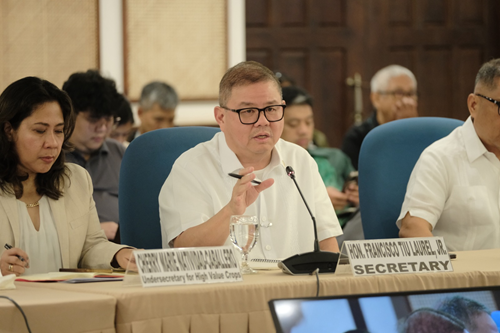
DA Prioritizes Local Agriculture, Limits Imports to Emergency Supply Needs
Category : AGRI-NEWS
Read More →
Philippines Launches $1-Billion Agriculture Transformation Program with World Bank and UK Support
Category : AGRI-NEWS
Read More →