The Philippines and Japan are taking significant steps toward strengthening their agricultural partnership, with both nations laying the foundation for expanded cooperation in food security, smart farming, fisheries, trade, and climate-resilient agriculture ahead of the scheduled state visit of President Ferdinand Marcos Jr. to Japan later this month.
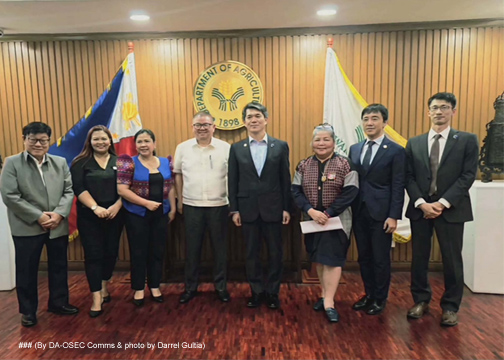
Japanese Ambassador Kazuya Endo led a delegation during a courtesy meeting with Agriculture Secretary Francisco P. Tiu Laurel Jr. on Monday to begin discussions on key agreements and collaborative initiatives expected to be finalized during the presidential visit.
At the center of the bilateral talks is the proposed amendment to the Philippines-Japan Memorandum of Cooperation (MOC) on agriculture. The updated agreement seeks to formally integrate fisheries into the partnership, recognizing the sector’s growing importance in food security, livelihood generation, and export development for the Philippines.
The discussions also highlighted opportunities for expanded technological collaboration between the two countries. Japan’s advanced expertise in smart agriculture, digital farming systems, precision agriculture, and agricultural innovation is expected to support the Philippines’ efforts to modernize its food production systems and improve farm productivity.
Under the proposed amendments, both governments are set to establish a Joint Committee on Agriculture and Fisheries, which will serve as a long-term mechanism to strengthen coordination, sustain bilateral programs, and accelerate agricultural development initiatives.
Tiu Laurel emphasized the broader significance of Japan’s continued engagement with the Philippines, describing the meeting as a reaffirmation of the strong and enduring partnership between the two nations.
“This visit reflects the strength and continuity of our relationship with Japan as we pursue common goals in food security, sustainability, innovation, and agricultural modernization,” Tiu Laurel said. “It also allows us to align priorities and fast-track initiatives that will directly benefit Filipino farmers and fisherfolk.”
The amended MOC is expected to be finalized and signed during President Marcos’ upcoming state visit, signaling both countries’ commitment to deepening cooperation in agriculture and related sectors.
Preparations were likewise discussed for the second Joint Committee on Agriculture and Fisheries meeting, which Japan is scheduled to host in early July as part of ongoing efforts to sustain dialogue and expand collaboration.
The Philippines also highlighted its planned participation in the Green X EXPO 2027, viewing the international platform as an opportunity to promote Philippine high-value crops, attract foreign investments, and strengthen the country’s presence in global agricultural markets.
Climate cooperation emerged as another major focus of the discussions, particularly through the Joint Crediting Mechanism. The Philippines is currently advancing the use of Alternate Wetting and Drying technology in rice farming — a climate-smart farming practice that helps reduce greenhouse gas emissions while potentially generating carbon credits.
Trade concerns were also tackled during the meeting, including the Philippines’ request to reduce tariffs on fresh bananas exported to Japan. Both countries also exchanged updates on ongoing technical assessments involving market access for Philippine pomelos in Japan and Japanese grapes in the Philippines.
In addition, officials explored opportunities for collaboration in fertilizer development, including biofertilizers and precision agriculture technologies aimed at improving agricultural efficiency, lowering production costs, and supporting sustainable farming practices.
The growing partnership between the Philippines and Japan reflects a broader strategy to modernize agriculture, strengthen food systems, and create long-term economic opportunities for farmers and agricultural stakeholders in both nations.
NPO News Team | DA Press Office