Yultong and the 10th BCT
OPINION | Letter to the Editor Posted on 2026-04-30 02:53:34
Seventy-five years after the Battle of Yultong, it is worth asking not just what happened, but what we have chosen to remember.
In global histories of the Korean War, Yultong is often a footnote. It does not carry the same weight as larger campaigns or decisive turning points. But for Filipinos, it should matter more than it currently does. Not because of scale, but because of what it revealed about the country’s soldiers.
Around 900 Filipinos from the 10th Battalion Combat Team of the Philippine Expeditionary Forces to Korea held their ground against thousands of Chinese and North Korean troops. The numbers alone are striking, but numbers do not fully capture what took place. This was not just a defensive stand. It was a refusal to retreat when retreat might have been the easier and safer choice.
What makes the story more compelling is who these soldiers were. They were not a uniform group shaped by a single path. Some were veterans of the Second World War. Others were former guerrillas, students, professionals, or ordinary citizens who found themselves in uniform. Many officers came from ROTC programs, standing alongside graduates of the Philippine Military Academy. It was, in many ways, a cross-section of Filipino society brought together by circumstance.
During the battle, distinctions between roles disappeared. Cooks, clerks, medics, and typists took up arms. When units on their flanks withdrew, the Filipinos did not follow. They stayed, even when faced with overwhelming odds. It is easy to frame this as heroism, and it is. But it is also a reminder of the kind of resolve that rarely finds space in modern conversations about national identity.
Individual acts of bravery stand out. Conrado Yap led a counterattack to rescue trapped comrades, fully aware of the risks. He did not survive, but his actions earned him the Medal of Valor, as well as honors from the United States and South Korea. Jose Artiaga Jr., who also fought under overwhelming pressure, was likewise recognized for his leadership in the face of near-certain defeat.
Fifteen Filipinos died in that distant battlefield. Hundreds of enemy soldiers reportedly fell. These are not just statistics. They represent a moment when Filipinos fought not for their own land, but for the defense of another nation.
And yet, despite this, the Battle of Yultong remains largely absent from public consciousness.
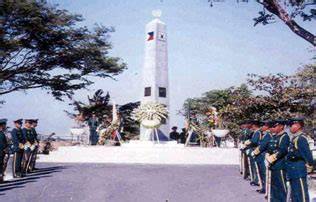
Commemorations still take place. This year, a wreath-laying ceremony was held at the Libingan ng mga Bayani, attended by officials such as Gilberto Teodoro Jr. and South Korean Ambassador Lee Sanghwa. These gestures are important, but they often feel contained, observed by a few rather than remembered by many.
What is more telling is how easily this history fades outside formal ceremonies. Visiting the War Memorial of Korea, one can find a section dedicated to Filipino troops. Yet even among Filipinos, awareness is uneven. There are still those who are surprised to learn that Filipino soldiers fought and died in Korea.
This raises an uncomfortable question. Why do some parts of our history resonate, while others quietly disappear?
Perhaps it is because Yultong does not fit neatly into familiar narratives. It is not a story of independence or internal struggle. It is a story of Filipinos fighting in a foreign war, under a global alliance, in a conflict that many today barely discuss. It challenges us to think about our role in the world, and about the sacrifices made beyond our own borders.
Remembering Yultong is not about glorifying war. It is about recognizing a standard of courage and commitment that existed, and asking whether we still value it.
We do not know when the country will again be called to test that kind of resolve. But memory matters. Not as nostalgia, but as a way of grounding ourselves in what Filipinos have been capable of when faced with difficult choices.
If the story of the 10th Battalion Combat Team fades completely, it will not be because it lacked significance. It will be because we allowed it to.
NPO News Team | Philippine News Agency - PR
Share:
Writer :
Link :
Leave a Comment:
Date: Wednesday | October 7, 2026 | 12:49:am
Sections
Recent News
RECENT POSTS
CDA MIMAROPA Empowers Cooperative Leaders to Lead the Digital Transformation and AI Era
Category : AGRI-NEWS
Read More →