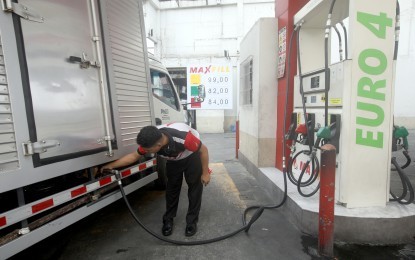
MANILA – The Department of Energy (DOE) on Monday assured that the country’s fuel supply remains sufficient, with current reserves expected to last for several weeks.
In an online briefing, Energy Secretary Sharon Garin said that as of April 24, the Philippines has an average fuel supply equivalent to 54 days.
DOE data showed that gasoline stocks can last for 53.01 days, diesel for 54.61 days, kerosene for 168.74 days, jet fuel for 70.83 days, fuel oil for 67.55 days, and liquefied petroleum gas (LPG) for 38.44 days.
Garin noted that LPG supply is gradually increasing, with additional shipments expected in May following a consolidated order from a supplier in the United States.
In a separate statement, the DOE confirmed that all four diesel shipments secured under the government’s Emergency Energy Security Program have already arrived, bringing in a total of 178.33 million liters to boost the country’s fuel reserves amid global market uncertainties.
The agency said the deliveries were part of the government’s fuel security efforts under Executive Order No. 110 issued by Ferdinand R. Marcos Jr., which mandates urgent measures to ensure stable domestic energy supply.
The first shipment, amounting to 22.66 million liters from Japan, arrived in Batangas on March 26. This was followed by a 52.41-million-liter delivery to Subic, another 50.8 million liters also to Subic, and a final 52.4-million-liter shipment that reached Davao City.
Garin said the completion of these deliveries reflects the government’s proactive efforts to safeguard fuel availability as tensions in the Middle East persist.
Meanwhile, the DOE also announced fuel price adjustments for the week. Diesel prices are set to decrease by PHP12.94 per liter, while kerosene will drop by PHP15.71 per liter. Gasoline prices, however, will increase by PHP0.53 per liter. Oil companies are required to implement these changes.
On the power supply outlook, DOE Undersecretary Rowena Guevara said there are currently no indications of yellow alerts across the country’s power grids for May.
She explained that while unplanned outages at power plants can sometimes trigger alerts, current projections based on available capacity and expected demand do not point to any immediate risk of power shortages.