Marcos Administration Enacts 4 Landmark Science Laws to Boost Disaster Readiness, Health Security, and STEM Development
News | National Posted on 2025-12-25 02:45:59
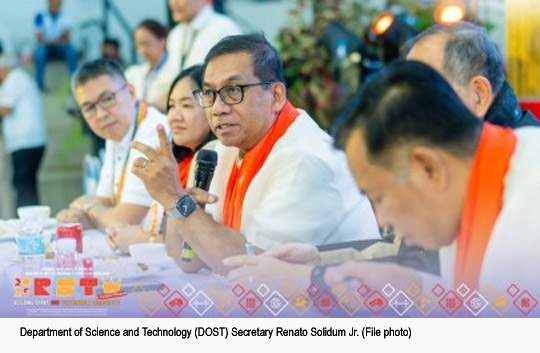
MANILA – The Marcos administration has enacted four major science- and technology-related laws in 2025, marking a significant push to strengthen disaster preparedness, health research, nuclear safety, and science education in the country, according to the Department of Science and Technology (DOST).
DOST Secretary Renato Solidum Jr. said the newly signed measures reflect the government’s strong commitment to science-driven development and national resilience.
PHIVOLCS Modernization Law
One of the landmark measures signed into law is the Philippine Institute of Volcanology and Seismology (PHIVOLCS) Modernization Act, which aims to significantly enhance the country’s disaster risk reduction capabilities.
Solidum said the law will enable major upgrades in geological monitoring through advanced equipment, additional seismic stations, and the hiring of more technical experts. The law allocates ₱7 billion over five years for PHIVOLCS modernization.
PHIVOLCS Director Teresito Bacolcol earlier said the measure is critical in improving the accuracy, speed, and reach of warnings related to earthquakes, volcanic eruptions, tsunamis, and other geotectonic hazards.
“This will greatly strengthen our capacity to protect lives and property,” Bacolcol noted, adding that the agency’s regular budget previously covered only basic operations.
Virology and Vaccine Institute of the Philippines (VIP) Act
Another major law signed in 2025 is the Virology and Vaccine Institute of the Philippines (VIP) Act, which aims to strengthen the country’s preparedness against future pandemics and health threats.
Solidum said the law will support research on human, animal, and plant viruses, addressing both public health and food security concerns.
The VIP will focus on vaccine research and development—from discovery to pre-clinical testing—and will establish advanced facilities such as high-containment laboratories, biobanks, and genome research centers.
Philippine Atomic Regulatory Act
The Philippine Atomic Regulatory Act, also signed in September, establishes a comprehensive framework for the safe and peaceful use of nuclear energy in health, agriculture, industry, environmental protection, and energy development.
The law creates the Philippine Atomic Energy Regulatory Authority (PhilATOM), an independent body responsible for nuclear safety and radiation protection. It will also serve as the country’s official contact point for nuclear and radiological emergencies.
The measure separates regulatory functions from research and promotional roles previously handled by the Philippine Nuclear Research Institute (PNRI), aligning the country with international nuclear safety standards.
Expanded Philippine Science High School (PSHS) Act
The fourth law, the Expanded Philippine Science High School Act, aims to accelerate human resource development in science, technology, engineering, and mathematics (STEM).
Under the law, PSHS campuses will be expanded nationwide, with a target of at least two campuses per region. This move seeks to widen access to quality science education and better prepare Filipino youth for future scientific and technological challenges.
Solidum also reported that the DOST supported 10,811 STEM scholars during the first semester of 2025 alone, highlighting the government’s sustained investment in human capital development.
“These laws reflect our long-term vision of building a science-driven, resilient, and globally competitive Philippines,” Solidum said.
— NPO News Team | PNA
Writer :
Link :
Leave a Comment:
Date: Monday | February 23, 2026 | 9:27:pm
Sections
Recent News
RECENT POSTS

DA, DOT Seal Partnership to Elevate Farm Tourism and Promote PH as Food Destination
Category : AGRI-NEWS
Read More →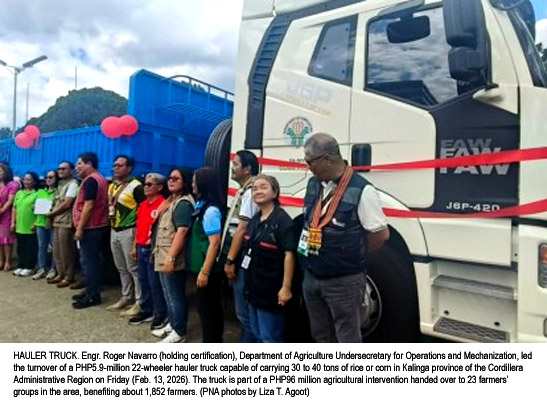
DA Turns Over PHP96.35-M Farm Aid Package to Boost Kalinga Agriculture
Category : AGRI-NEWS
Read More →
Eala Advances to Dubai Second Round After Baptiste Retires Due to Injury
Category : Sports
Read More →
BB 88 Advertising and Digital Solutions Inc. Welcomes Its Largest Internship Batch Yet, Empowering Over 80 Future Filipino IT Professionals in 2026
Category : Technology
Read More →